Getting to Know: Maddie Frost

Really Rubie | Book by Maddie Frost | Official Publisher Page | Simon & Schuster

I just said goodbye once again to a group of enthusiastic 5th grade students ready for their next adventures. It’s an exciting but challenging time, which author-illustrator Maddie Frost captures in her fun new illustrated middle grade novel. I caught up with Maddie to learn more:

Me: Congratulations on the release of REALLY RUBIE (Aladdin/S&S, June, 2026)! It’s an emotionally real portrait of a rising 6th grader, and it’s also super funny! What inspired you to write this book?

Maddie: Thank you! It was a combination of a couple things. I think I felt a little maxed-out with picture books at the time I started contemplating my next project. The writer in me craved more on the page, and since I’ve stepped my foot in the graphic novel pool, middle grade seemed like the next best challenge. And I really love a challenge. There were a few comics I made about myself that I shared on social media in the past, and the doodle I drew of me is very similar to Rubie’s final design. That became the spark to want to make a diary book. The story itself was inspired by my own trip to an all-girls camp in Vermont when I was twelve. The major difference was that my best friend came with me. And I always wondered what kind of experience I would have had if I went alone. Rubie is a product of that daydream. Now that I had a direction, I made it my mission to create a character that was universally relatable. I’m talking to kids AND adults. She needed to be someone that everyone could see themselves in. Flawed, authentic, vulnerable, sensitive, and the hero of her own story.

Me: I like that making art is so important to Rubie. Were you a class artist growing up? Any memorable art teachers (asks this current art teacher)?

Maddie: Oh yeah, 100%. I grew up in a small town, with a graduating class of like seventy kids. I was the class artist. It was something I took pride in, until I went off to art school and my ego wash demolished. RIP. But I had really wonderful art teachers throughout my life. And I was always one of their favorites (obviously). I was an elementary art teacher for a while before I jumped ship and did this full-time. I loved working with students, and I loved being a witness to their success. I put some of my early artist ego into Rubie, especially when she meets Eliza. Rubie doesn’t have anyone to compare her art ability and passion to. She’s never felt insecure about it until she meets Eliza, who’s super talented. It’s something I relate to even as an adult. That feeling of “I’m not as good as so-and-so.” What ultimately happens is that sometimes comparison leads to inspiration. And sometimes it also leads to friendship.

Me: You’ve written and illustrated many picture books, but this is your first illustrated middle grade novel. Any pros or cons in switching formats?

Maddie: This is definitely the most personal book I’ve ever written. It’s a pretty clear reflection of my youth and how I was as a tween. The feels are real. That part of my life will always be with me, and it kind of freaks me out how easily I’m able to access it. Writing a middle-grade novel meant I lingering in moments much longer than in a picture book. I could go nuts with building atmosphere, tension, suspense, and (my favorite) comedic timing. I could do so much more storytelling with words. A task that was thrilling and terrifying.

Me: Any advice for writers and illustrators trying to break into publishing?

Maddie: Okay, but it’s going to sound so cheesy. My advice to you is to create from your heart. (I told you!!) Ignore the noise of what you think you should be writing, or what other people are doing, and write whatever excites you. What kind of book would you want to read? Write that. If you want to illustrate books, build a portfolio that is authentic to you and how you love to work. And get yourself an agent. Representation is so important. How do you get an agent? Well, you have to do your research. Are there artists you admire that have an agent? Reach out to those people via email or social media and ask about them. The kid-lit community is SO NICE. We’re always happy to help fellow aspiring creatives because we’ve all been there. Also, don’t give up. Roadblocks and rejection are inevitable in publishing so just keep going. You got this.

Me: When (hopefully) can we look forward to book two? Any other upcoming books or projects you’d like to share?

Maddie: YES! You MUST look forward to book two because it’s coming in 2027. The manuscript is done, and I just have a few more chapters to draw. In the second book, Rubie starts sixth grade. I don’t want to say much, but A LOT happens. Riley’s made a new friend while Rubie was away at camp. Remember when Rubie saw a signature on Riley’s new cast at the camp dance. Easter egg alert! There’s an art scandal, a BIG lie, breaking and entering into a classroom, suspicion of Mom dating, a birthday, and a new crush. Yikes! I know.

*And just one more thing, if you are reading this and you have read Really Rubie, I just want to say thank you.

Me: Looking forward to book two! Thank you so much for chatting, Maddie. Wishing your series much success!

To learn more, please go to Maddie Frost Books.
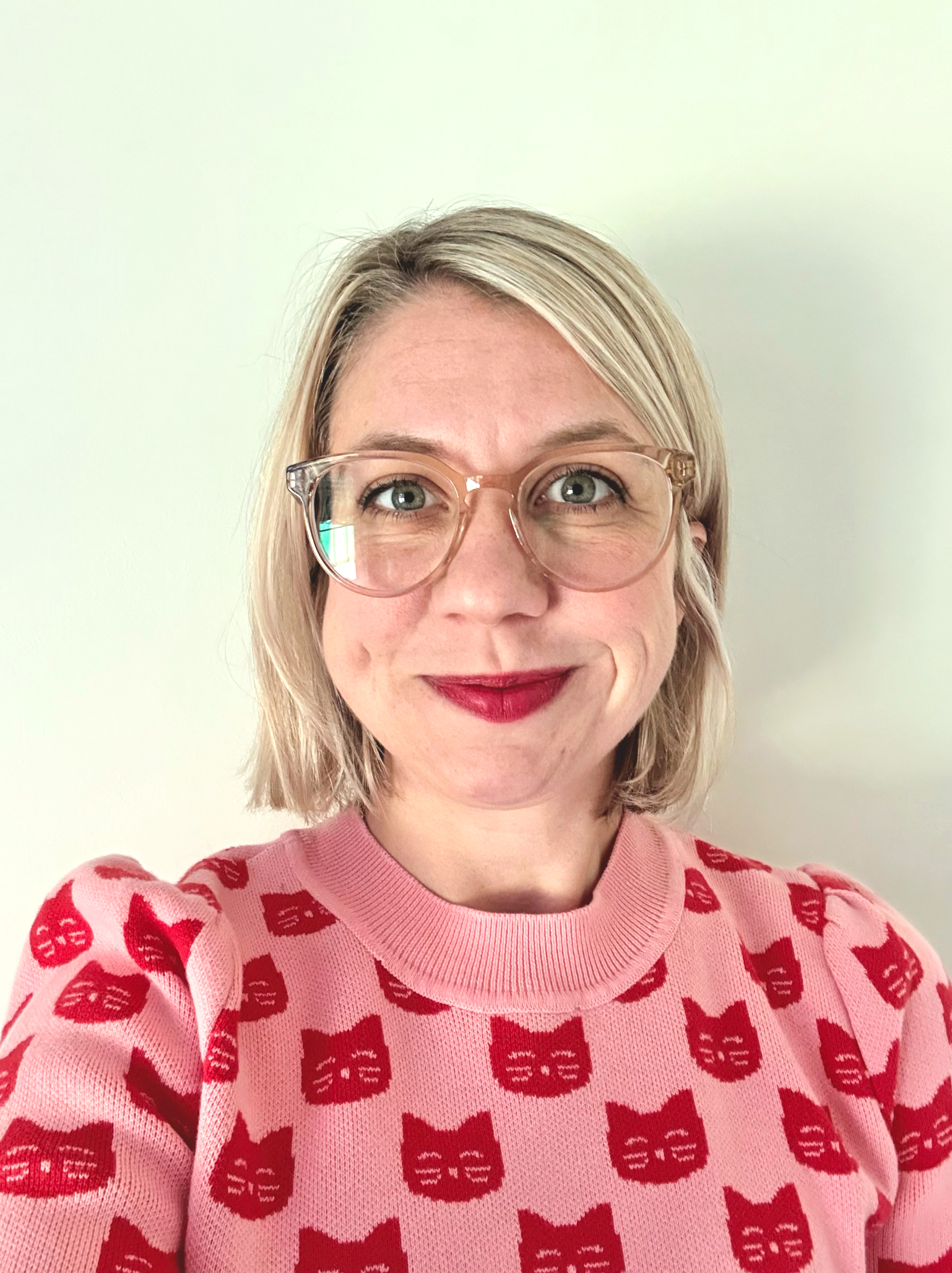
Maddie Frost

Getting to Know: Naomi Danis


As a teacher, I’ve readied my classroom each August for almost the past 30 years. It’s a special, hopeful time. It’s also a time when students are anxious for the new year. Wouldn’t it be great if someone could write a reassuring book about this transition? Oh, wait, author Naomi Danis just did! I caught up with Naomi to learn more:

Me: Congratulations on your warm and welcoming new picture book, KINDERGARTEN GETS READY (Little, Brown and Company, May 2026)! I’ll definitely be reading it to kindergarteners in the fall. What inspired you to create this book?

Naomi: My nephew, Zach Seiden, is a kindergarten teacher, and early in his career he would invite my sister, Debra Danis Seiden, his mom, to help him get his classroom ready for the first day of school.  While my sister doesn’t appear in the book, it is dedicated to her memory. I am so grateful that I was helped by editor Susan Rich to make this personal story of family love into a book that might appeal to a wide audience.

Like Zach, I trained as an early childhood teacher at Bank Street College. I went on after a few years in the field to a decades-long career in publishing at the Jewish feminist magazine, Lilith, where I was thankfully encouraged in my writing for kids, an aspiration I had since my own childhood.


Me: As an educator by day myself (elementary art), I can attest to the amount of set up and prep that goes into teaching! Do you have a favorite teacher or teachers from your school days that made a big impression on you?

Naomi: Wow! Like you, my mom, and Pete Oswald’s mom, were elementary school art teachers, all inspiring and nurturing creativity in kids.  My mom taught in in Astoria, in Queens, NY, one of the most ethnically diverse counties in the US.  Once, after she taught the kids to crochet granny squares, other teachers reported that the entire school was crocheting under their desks.

I was very fortunate that I had so many great teachers throughout my education, including graduate school!


Me: Pete Oswald’s bright and detailed and inviting illustrations really build an inviting classroom! How were you two put together and what was your experience seeing his illustrations bring this story to life?

Naomi: In my eyes, Pete Oswald’s gorgeous illustrations really make the book!

I feel so lucky that Susan knew Pete’s work, had been wanting to do a book with him, and thought he was a good match for the content. I understand his youngest child was beginning kindergarten, which gave him a particular interest in taking on this project.

I love so many of the illlustrations. I love that Mr. Bee arrives at school on a bicycle and that he has a helmet.  I love the image of the dress-up corner where Mr. Bee is trying on a hat that is not a cowboy hat.  There are so many visual details that reward reading the book again and again: you follow Yoshi, the guinea pig, throughout the book. Friends and family who have the book have been mentioning details to me that I hadn’t before noticed.


Me: Do you have any advice for writers trying to get picture books published?

Naomi: Kindergarten Gets Ready is my 8th picture book. My first was published in 1995, so I have been at this for a long time, with a lot of patience, lots and lots of rejections, lots of rewriting, and some very good luck.

My advice to writers who want to get a picture book published is, first of all, don’t quit your day job, book sales rarely amount to something you can live on. Secondly, many aspiring picture book writers don’t know that if you want to be published traditionally, the editor will find an illustrator, you don’t need to find one yourself.

I don’t have an agent and have never looked for one.  It’s my impression that it can sometimes be as hard or harder to find an agent than it is to find a publisher.  Many smaller publishers accept un-agented submissions, and they are often more willing and able to take risks on new writers than the big publishers.

I have always enjoyed learning about the children’s book industry by reading Publishers Weekly, being a long-time member of SCBWI, the Authors Guild and PEN America, attending conferences, and being active on social media.

Perhaps my most important piece of advice is, if you want to write a picture book for kids, do it, keep at it, and don’t give up!

Me: Can you share what you’re working on next?

I have several picture books in various stages of submission and revision: the youngest girl in a family who wants to be included in surprising their mom for her birthday; a little boy who wants to wear his pajamas to school; a little girl who wants to be invisible; a grandmother who thinks her grandkids are like royalty when they come down the stairs in the morning with their blankets wrapped around their shoulders.

Me: Thank you for chatting, Naomi. Wishing your book much success!

To learn more, please go to Naomi Danis .

Getting to Know: Matthew Cordell


If you follow the work of Matthew Cordell, you know he loves to sketch in ink. But what if that ink came from a multi-colored scented ballpoint pen? And what if the illustrations that came out of it formed an unexpected and heartwarming adventure that played with space and time? 102 is a special book, and I’m glad I got to talk to Matthew to learn more:

Me: Congratulations on your enchanting new picture book, 102 (Little, Brown and Company, April 2026)! It’s surrealism and number-play harken all the way back to Alice, but it also has touching themes about caring for animals and each other. What inspired you to create this book?

Matthew: Thanks, Jonathan! The earliest point of inspiration came from a simple event back in 2019 when a frog became trapped in one of the window wells of our basement. My 6-year-old son (at the time) and I came up with a plan to rescue the frog together with a rope, a broom, and a bucket on a rope. In the end, the frog was rescued and lived to see another day! That sweet little father/son adventure was the first little spark that inspired me to write some sort of animal capture and rescue story. Bit by bit, the story expanded and stretched out into far more than that, and often times, that’s how these things work.

Me: From what I’ve read (I like weird statistics) a ballpoint pen can write for 1 to 2, maybe more, continuous miles. You used 16 pens, which means that your own journey in this book was very long! For those of us who are mainly coloring digitally these days, what was the physicality like of drawing the many miles of this book?

Matthew: I’ve actually never heard that! Very interesting! I did use a multi-colored ballpoint pen to make the drawings in 102. It was a slow, tedious, layered approach where I would draw everything in one color—always the lightest, which would be yellow or light blue—then layer more lines over that, then layer more lines over that. It was sort of like mixing paints, but it was mixing colors of lines from the pen. These pens, which are often marketed for kids, I found in my own kids art supply stash. After playing around with them in my sketchbook, I had fun drawing with them in this way, and it ended up becoming how I wanted to draw my next book. The end result of this type of drawing, sort of radiates and vibrates with all the layers of colors, which works well with this unusual, topsy-turvy story.

Me: Both books – and art supplies – can have intoxicating scents (yes, I’m a book smeller, and I also love my Blackwings for their cedar aroma). So here’s an odd question: given the miles of overlapping, scented ink, what does the final art of 102 – or your studio – smell like?

Matthew: Because these inks in these pens were scented like candy—did I mention they are marketed for kids?—this was the first overtly scented artwork I’ve ever created. Smells of cotton candy, bubble gum, chocolate, licorice, and more would waft up from my drawing table as I was making these pictures! It only added to the very surreal reality of the whole thing. Unfortunately the smell does not last for too long—maybe a day tops—so the finished drawings today don’t have much of a smell at all. It was fun while it lasted!


Me: You give fun nods (and beans) to Miyazaki (I spy Totoro), Lobel (Frog and Toad), Jules Feiffer, and many more. Do you see this book as a homage to your inspirations?

Matthew: In a lot of my books, I try to hide fun little Easter Egg-y type things for kids to find. It’s always fun to hear from a young reader that they’ve found something in one of the pictures in a book. But with 102, I did a lot of that. I hid the number 102 in a handful of pictures (my original intention was to hide the number 102 times, but I couldn’t quite get there). But there was lots of opportunities to plant names and images of favorite artists throughout the book. Like with a poster on a wall, or some other background image like that. I also wanted to draw 102 beans for the art on the endsheets (102 bean soup is a plot point in the book), and because there are nowhere near that many different kinds of beans in the world, I had to come up with some fun names. I used a lot of art heroes, family members, my Little, Brown collaborators (editor and book designer), etc. While I was drawing this book, I was watching all of the Studio Ghibli films in order of release, so there’s lots of Ghibli artist and character nods, for any other Ghibli fanatics out there.


Me: Can you share your upcoming releases or what you’re working on next?

Matthew: Next up for me is Starman : The Cosmic Voyage of David Bowie, a picture book biography about one of my biggest artistic inspirations, David Bowie. Because Bowie was not at all a straightforward person, my biography of him is fittingly unorthodox too. He’s depicted as a space traveler (a Little Prince type figure) who searches the cosmos for artistic inspiration. He stops briefly at one planet after another, finding inspiration and creating new art from his discoveries. Then he moves on to try something and someplace new. Also like Bowie, I had fun trying out some different art styles for each different planet and sound he discovered. I’m excited for that one to come out in September.


Me: Wow, that’s sounds great. Looking forward to it! Thank you so much for chatting, Matthew. Wishing 102 much success!

To learn more, please go to Matthew Cordell.

Getting to Know: Amanda West Lewis


I’m excited to be welcoming back author Amanda West Lewis (see previous interview about A PLANET IS A POEM), whose first graphic novel is about to release:

Me: Congratulations on your touching new graphic novel, LOOKING AT THE SKY: How Dr. Janusz Korczak Fought for Children’s Rights (Kids Can Press, June, 2026). He’s an inspiring figure, to say the least. What inspired you to write this book?

Amanda: Well, it is rather a long story. I learned about Janusz Korczak in 2005 from Leon Gluzman, who had grown up in Dom Seirot, one of Korczak’s orphanages, in the 1920s. At the time, I was the Artistic Director of a theatre school (The Ottawa School of Speech & Drama) and Leon was the landlord for our building. Although he was very elderly when I met him, his eyes brimmed with tears when he spoke about “Pan Doctor” and his childhood at the Dom Seirot. I was deeply moved by what he told me and felt that this was an important story to tell. I wanted young people to know about the legacy that Korczak’s ideas have had on children’s rights. But I also wanted to inspire adults to think differently about children.


Me: Did you have this in mind as a graphic novel from the start? What was your writing process like?

Amanda: Again, another long story! Since learning about Korczak, I’ve explored a number of different ways to tell the story. As I said, when I first heard about him, I was running a theatre school for young people. So, initially, I worked with young student performers to workshop story lines and ideas based on first-hand interviews that we did with Leon. That workshop led me to co-commission and co-produce a professional stage production, The Children’s Republic, by Hannah Moscovitch, with the Great Canadian Theatre Company (G.C.T.C., 2009). That play did wonderfully well, but I still felt that there were ideas I wanted to explore. In 2015, I tried writing a middle grade biography. But it was flat and heavy. Then in 2017, I was studying picture book biographies, and I started on a picture book about Korczak. Eventually, I submitted that manuscript to my editor at Kids Can Press, Kathleen Keenan, with whom I working on A Planet is a Poem.

Her response was what my inner voice had been telling me, but I had been studiously ignoring. “There’s too much material here for a picture book.” But her next sentence took me totally by surprise. “Have you ever thought of writing a graphic novel?”

Truth be told, I never had. I had hardly read any graphic novels! But I leapt in and started researching how on earth to write one.


Me: The illustrations by Abigail Rajunov bring a gentle warmth to Izaak’s hard life. What was it like seeing her bring this story visually to life?

Amanda: It was a revelation. The book became real the moment I saw her work. It was similar to the way you feel when a play you’ve written or produced takes its first shaky legs on a stage. It is both part of you and, suddenly, part of someone else. Just as actors animate and breathe life into their characters, so did Abigail. My two-dimensional people were suddenly walking, talking, and feeling.  It was quite powerful.


Me: I’ve almost read King Matt before and am now newly inspired to pick it up. Is that a good place to start with Dr. Korczak’s books? Which are your favorites?

Amanda: King Matt the First is a moving story that exemplifies everything Korczak was trying to get across to both children and adults. It is certainly a great place to start. But for me, one of the most profound pieces that he wrote is called When I am Little Again. It’s a small fictional piece in his book The Child’s Right to Respect.  As with the best teachers, Korczak used fiction to explore his philosophical and pedagogical ideas. That small story changed how I write and how I think about young people.

King Matt the First: Korczak, Janusz, Lourie, Richard, Codell, Esmé Raji: 9781565124424: Amazon.com: Books


Me: Can you share what you’re working on next?

Amanda: I’m very excited to have a new picture book coming out next year called Once a Pear (Kids Can Press, 2027). It’s a very visual story for little children, with a strong environmental and community setting. I’m also in the weeds with a new YA novel, as well as a stage adaptation of one of my mother’s books, Little Comrades. But what I’m really working on right now is trying to get a bit more time in my garden!

Me: Writing is important, but so is garden time! Thank you so much for chatting. Wishing your book much success!

To learn more, please visit Home | Amanda West Lewis | Canadian Author | Perth Ontario

Getting to Know: Christy Hale


Bridges are one of those subjects that may sound dry, but to structure geeks like me, are endlessly fascinating. When I learned author-illustrator Christy Hale was working on a picture book about all things that connected spaces, I knew I wanted to learn more:

Me: Congratulations on your illuminating new picture book, REACHING ACROSS THE SKY: A Celebration of Bridges (Christy Ottaviano Books/Little, Brown, May 2026)! It really is a beautiful celebration of all that is built (and naturally formed) to make geographic connections. What inspired you to create this book?

Christy: Thank you! Many of my ideas germinate for a long time. The beginnings of this one dates back to 2011, when on the Tower Bridge of London, I viewed an exhibit on the history of bridges. I couldn’t stop thinking about the social impact of bridges, how they solve problems, change people’s lives, and open opportunities. This topic simmered on a back burner until 2021. At that time, I was working with Christy Ottaviano on a separate idea that wasn’t working yet. Christy asked me what other projects I was developing. I sent her a list of possibilities, and she responded enthusiastically to this bridge theme. With her interest, I began to focus. She encouraged me to add more engineering content, and since I’m the daughter of an engineer, this felt fun and natural to me.


Me: Of the 100+ bridges you depicted, how many have you crossed or observed in person? Any favorites of all bridges? Any bucket list crossings? (If you haven’t been across the Chesapeake Bay Bridge, I’ll take you if you’re ever in this area; note that I often get very white knuckled in the process).

Christy: Sadly, only twelve! My goal was to include bridges from all over the world, of varied styles, from ancient structures to ones currently being built. I even included a natural ice bridge from Antarctica so I could represent all the continents.

My favorite bridge is one I have crossed by foot or subway countless times, the Brooklyn Bridge. When I read about its construction in The Great Bridge by David McCullough, I wished I could travel back in time to witness the opening.

The summer before last, I had a bucket list experience, visiting the Pont du Gard, a Roman aqueduct in southern France built in the first century CE. This was the tallest of all the Roman aqueducts. The top tier was lined with the Roman’s special concoction of waterproof concrete. The bottom two tiers were formed of stones cut and positioned without the use of any mortar—astonishing engineering! Since working on this book, I can’t help but analyze every bridge I cross. I’m intrigued by the variety and ingenuity of movable bridges. In the future, I would like to visit more of those. Thank you for the invitation to join you in a crossing of the Chesapeake Bay Bridge. I have not experienced it, so I just did some research. It seems to be a very long, high, and narrow bridge with low railings. Gulp! I understand your white knuckles. I would love to hear from other readers about bridges they recommend I should visit.


Me: Most illustrators would not think to use textured paper collage for structural illustrations, but yours are both detailed and sumptuous. What made you take this approach? Can you talk about your art process?

Christy: Working in collage allowed me to create an interplay of the geometric and the organic which I hoped was fitting to show humanmade structures in natural environments. I cut paper for sharp forms and ripped it for soft ones. This approach helps me to simplify and abstract what I see. Like any illustrator, I start out with black and white line to figure out the compositions. Additionally, I always add a couple values in my sketch dummy. These values help me see the major shapes. The shapes become my patterns which I transfer onto various colored papers, cut, and combine in my art. I have drawers of paper scraps which I organize by color groups. I realize it’s not the fastest way to work but I enjoy this tactile process.


Me: How did you get into creating books for kids?

Christy: I seem to have been reaching for it in different ways most of my life. When I was ten, my best friend and I rushed home from school to create our own stories together, and I dreamed then of becoming a writer and illustrator. I have always loved the form of a book. In college and early adult life, I studied calligraphy, bookbinding, and many methods of printmaking, including letterpress. I created limited edition chapbooks, hand setting the text, carving woodcuts for illustrations, printing, and binding each book. I have a master’s degree in teaching and my first job after college was as a middle school art instructor in West Linn, Oregon. The language arts teacher and I developed, and team taught a course called “Writers and Illustrators.” Though I loved teaching art, I was hungry to have my own art nurtured, so I made a big life change to pursue my childhood dream. I relocated to Brooklyn, NY to study Communication Design (illustration, typography, and graphic design) at Pratt Institute. After Pratt, I landed my first job in publishing, as assistant to the Art Director at E.P. Dutton. With promotions, I moved to other major children’s book publishers, eventually becoming the Art Director for Macmillan/Four Winds Press. Those years of in-house training with publishing professionals was invaluable. I worked closely with many different editors, and they gave me my first publication opportunities.

Me: Can you share what you’re working on next?

Christy: This is a busy spring for me. Serious Fun!: Work & Play with Charles & Ray Eames published in March with Neal Porter Books/ Holiday House. Reaching Across the Sky: A Celebration of Bridges publishes May 19 with Christy Ottaviano Books/ Little, Brown, and Bibi Steps Out! written by Roni Schotter, illustrated by me publishes in early June. Now I am back in development mode, nudging along different ideas: concept books, nonfiction and fiction picture books, as well as an early chapter book series. I’m researching, writing, sketching, and playing around with different art techniques. Stay tuned!

Me: All sounds fun! Thank you so much for chatting, Christy. Wishing your book much success!

To learn more, please go to www.christyhale.com.